Can a presidential candidate justify a long and friendly relationship with someone who, back in the 1970s, extolled violence and committed crimes in the name of a radical ideology -- and who has never shown remorse or admitted error? When the candidate in question is Barack Obama, John McCain says no. But when the candidate in question is John McCain, he's not so sure.
Obama has been justly criticized for his ties to former Weather Underground member Bill Ayers, who in 1995 hosted a campaign event for Obama and in 2001 gave him a $200 contribution. The two have also served together on the board of a foundation. When their connection became known, McCain minced no words: "I think not only a repudiation but an apology for ever having anything to do with an unrepentant terrorist is due the American people."What McCain didn't mention is that he has his own Bill Ayers -- in the form of G. Gordon Liddy. Now a conservative radio talk-show host, Liddy spent more than 4 years in prison for his role in the 1972 Watergate burglary. That was just one element of what Liddy did, and proposed to do, in a secret White House effort to subvert the Constitution. Far from repudiating him, McCain has embraced him.
How close are McCain and Liddy? At least as close as Obama and Ayers appear to be. In 1998, Liddy's home was the site of a McCain fundraiser. Over the years, he has made at least four contributions totaling $5,000 to the senator's campaigns -- including $1,000 this year.
Last November, McCain went on his radio show. Liddy greeted him as "an old friend," and McCain sounded like one. "I'm proud of you, I'm proud of your family," he gushed. "It's always a pleasure for me to come on your program, Gordon, and congratulations on your continued success and adherence to the principles and philosophies that keep our nation great."
Which principles would those be? The ones that told Liddy it was fine to break into the office of the Democratic National Committee to plant bugs and photograph documents? The ones that made him propose to kidnap anti-war activists so they couldn't disrupt the 1972 Republican National Convention? The ones that inspired him to plan the murder (never carried out) of an unfriendly newspaper columnist?
Liddy was in the thick of the biggest political scandal in American history -- and one of the greatest threats to the rule of law. He has said he has no regrets about what he did, insisting that he went to jail as "a prisoner of war."
All this may sound like ancient history. But it's from the same era as the bombings Ayers helped carry out as a member of the Weather Underground. And Liddy's penchant for extreme solutions has not abated.
In 1994, after the disastrous federal raid on the Branch Davidian compound in Waco, Texas, he gave some advice to his listeners: "Now if the Bureau of Alcohol, Tobacco and Firearms comes to disarm you and they are bearing arms, resist them with arms. Go for a head shot; they're going to be wearing bulletproof vests. ... Kill the sons of bitches."
He later backed off, saying he meant merely that people should defend themselves if federal agents came with guns blazing. But his amended guidance was not exactly conciliatory: Liddy also said he should have recommended shots to the groin instead of the head. If that wasn't enough to inflame any nut cases, he mentioned labeling targets "Bill" and "Hillary" when he practiced shooting.
Given Liddy's record, it's hard to see why McCain would touch him with a 10-foot pole. On the contrary, he should be returning his donations and shunning his show. Yet the senator shows no qualms about associating with Liddy -- or celebrating his service to their common cause.
How does McCain explain his howling hypocrisy on the subject? He doesn't. I made repeated inquiries to his campaign aides, which they refused to acknowledge, much less answer. On this topic, the pilot of the Straight Talk Express would rather stay parked in the garage.
That's an odd policy for someone who is so forthright about his rival's responsibility. McCain thinks Obama should apologize for associating with a criminal extremist. To which Obama might reply: After you.
By Steve Chapman
Showing posts with label John McCain. Show all posts
Showing posts with label John McCain. Show all posts
Sunday, October 5, 2008


Saturday, October 4, 2008
Ten Lies of John McCain
More On:
John McCain
John McCain told the Des Moines Register this week that he always tells "100 percent absolute truth," even in campaign ads. There's one big problem with that bold statement: it's just not true.
McCain has made a number of statements — in paid ads and on the campaign trail — that simply cannot be described as 100 percent accurate. Some aren't even close.
Barack Obama is guilty, too. He falsely accused McCain of wanting to slice Social Security benefits in half and grossly exaggerated his role in writing this year's economic stimulus plan. He also promised to accept public financing — and then proceeded to opt out when it was clear he could raise more money on his own.
But only McCain made this dare: Prove it, he told the Register. The paper did not — Politico will.
With the help of the truth-squad crew over at the invaluable Politifact and factcheck.org, as well as other fact-checking websites, here is a list of some of McCain's biggest whoppers:
1. On "The View," McCain claimed Sarah Palin did not take or request earmarks as governor of Alaska. "Not as governor, she didn't," McCain said. But in her first year in office, she requested $256 million in earmarks from the federal government.
2. Shortly after announcing Sarah Palin as his running mate, the McCain campaign ran an ad claiming, "She stopped the bridge to nowhere" — perhaps the most thoroughly debunked claim about the Alaska governor, who supported the bridge project before changing her position late in the game. Asked about the bridge during her 2006 gubernatorial bid, Palin replied: "I'm not going to stand in the way of progress."
3. At the Republican National Convention, McCain claimed Obama's national health insurance plan would "force small businesses to cut jobs, reduce wages and force families into a government-run health care system where a bureaucrat stands between you and your doctor." But according to factcheck.org, Obama's plan does not place burdens on small business, and people would have the option of keeping their existing insurance plans.
4. In a campaign ad, "Dome," McCain claimed Obama's election would result in "painful income taxes, skyrocketing taxes on life savings, electricity and home heating oil," the clear implication being that Obama wants to hike these tax rates. But factcheck.org says Obama hasn't proposed a tax on electricity or home heating oil and wouldn't raise taxes on investments for individuals earning less than $200,000 a year.
It's possible Obama's election would result in these tax rates increasing. But this McCain-Palin claim is a little like the Obama camp's misleading attack on McCain's Social Security plan, tagging his opponent with the most undesirable, unintended and far from certain consequences of his policy proposals.
5. McCain has repeatedly accused Obama of supporting higher taxes on people making as little as $42,000 a year. "Two times, on March 14, 2008 and June 4, 2008, in the Democratic budget resolution, he voted to raise taxes on people making just $42,000 per year," McCain said this week. But this is a misleading claim: Obama's votes were for nonbinding resolutions, which supported allowing certain Bush administration tax cuts to expire but didn't actually have the effect of raising taxes.
6. In a July visit to Colorado, McCain told voters: "I want to look you in the eye: I will not raise your taxes nor support a tax increase. I will not do it." Last Sunday, however, McCain acknowledged to ABC's George Stephanopoulos that his health care plan could lead to some people paying taxes on employer-provided health insurance.
"It depends on what plan they have," McCain said. "But that's usually the wealthiest people."
7. McCain's campaign claimed adviser Rick Davis had taken a leave of absence from his firm, Davis Manafort, and vigorously attacked a New York Times story suggesting that Davis had profited from Davis Manafort's relationship with mortgage lender Freddie Mac. "Mr. Davis has seen no income from Davis Manafort since 2006," wrote McCain spokesman Michael Goldfarb, who called the Times story "demonstrably false."
"Mr. Davis has never — never — been a lobbyist for either Fannie Mae or Freddie Mac."
But Davis Manafort was receiving $15,000 monthly payments from Freddie Mac as recently as August, and while the payments didn't go to Davis personally he still stands to gain from the success of his firm.
8. McCain has boasted of never requesting a single earmark, saying in January: "I have never asked for nor received a single earmark or pork-barrel project for my state." But he has requested federal funding for special projects back home, including $10 million for a center at the University of Arizona, $5 million for a home-state water project and spending authority to purchase land around Arizona's Luke Air Force Base.
Politifact says it's a matter of debate whether these projects constitute pork-barrel spending — but clearly McCain has searched for federal help in his own backyard.
9. In last Friday's debate, McCain accused Obama of "voting to cut off funds for the troops in Iraq and Afghanistan." But Obama has consistently voted in favor of war funding bills, including an earlier version of the bill McCain was discussing. The Illinois senator voted against this particular proposal because it did not push the Bush administration toward a timetable for withdrawal. McCain's comment was technically defensible — but rather too sly to be called "absolute truth."
10. In July, McCain accused Obama of skipping his visit to a military hospital in Germany because he was told he couldn't bring reporters and video cameras. McCain ran an ad saying: "Seems the Pentagon wouldn't allow him to bring cameras." But when pressed to provide evidence that Obama had canceled the visit for this reason, McCain's campaign could not support their claim — and media reports found no evidence that Obama had ever planned to bring media with him.
By Alexander Burns
Wednesday, October 1, 2008
John McCain's mansion on sale for $12 Million
More On:
John McCain
Got $12 million burning a hole in your pockets? Need a new mansion in Arizona? How about this little place, one of John and Cindy McCain’s unwanted castles?
It’s a 5,000+ square foot estate with nine bedrooms, eight bathrooms, a seven-car garage, an entire extra gourmet chef’s kitchen out by the swimming pools, a 1,750-square-foot guest house, and it’s all on 2.7 gated acres.
Remember, you’re middle-class if you make up to $5 million a year, so following the old rule about buying a house — the purchase price should be no more than three times your gross annual income — you can easily afford $12 million.
But go ahead and offer $7.5 million, because the real-estate market in Phoenix is wrecked.
[Phoenix Real Estate/Phoenix New Times/RealEstate.com]
Tuesday, September 30, 2008
John McCain: The Gambler - Part 3
More On:
John McCain
From Part 2
Change in Tone
After the Abramoff scandal, Mr. McCain stopped taking campaign donations from tribes. Some American Indians were offended, especially since Mr. McCain continued to accept money from the tribes’ lobbyists.
Resentment in Indian Country mounted as Mr. McCain, who was preparing for another White House run, singled out the growth in tribal gambling as one of three national issues that were “out of control.” (The others were federal spending and illegal immigration.)
Franklin Ducheneaux, an aide to Morris Udall who helped draft the 1988 Indian gambling law, said that position ran contrary to Mr. McCain’s record. “What did he think? That Congress intended for the tribes to be only somewhat successful?” Mr. Ducheneaux said.
Mr. McCain began taking a broad look at whether the laws were sufficient to oversee the growing industry. His campaign said that the growth had put “considerable stress” on regulators and Mr. McCain held hearings on whether the federal government needed more oversight power.
An opportunity to restrain the industry came in the spring of 2005, when a small tribe in Connecticut set off a political battle. The group, the Schaghticoke Tribal Nation, had won federal recognition in 2004 after producing voluminous documentation tracing its roots.
The tribe wanted to build Connecticut’s third casino, which would compete with Foxwoods and another, the Mohegan Sun. Facing public opposition on the proposed casino, members of the Connecticut political establishment — many of whom had received large Pequot and Mohegan campaign donations — swung into action.
Connecticut officials claimed that a genealogical review by the Bureau of Indian Affairs was flawed, and that the Schaghticoke was not a tribe.
The tribe’s opponents, led by the Washington lobbying firm Barbour Griffith & Rogers, turned to Mr. McCain’s committee. It was a full-circle moment for the senator, who had helped the Pequots gain tribal recognition in the 1980s despite concerns about their legitimacy.
Now, Mr. McCain was doing a favor for allies in the Connecticut delegation, including Senator Joseph I. Lieberman, a close friend, according to two former Congressional aides. “It was one of those collegial deals,” said one of the aides, who worked for Mr. McCain.
Barbour Griffith & Rogers wanted Mr. McCain to hold a hearing that would show that the Bureau of Indian Affairs was “broken,” said Bradley A. Blakeman, who was a lobbyist for the firm at the time.
“It was our hope that the hearing would shed light on the fact that the bureau had not followed their rules and had improperly granted recognition to the Schaghticoke,” Mr. Blakeman said. “And that the bureau would revisit the issue and follow their rules.”
Mr. McCain’s staff helped that effort by offering strategic advice.
His staff told a lobbyist for the firm that the Indian Affairs Committee “would love to receive a letter” from the Connecticut governor requesting a hearing, according to an e-mail exchange, and offered “guidance on what the most effective tone and approach” would be in the letter.
On May 11, 2005, Mr. McCain held a hearing billed as a general “oversight hearing on federal recognition of Indian tribes.” But nearly all the witnesses were Schaghticoke opponents who portrayed the tribe as imposters.
Mr. McCain set the tone: “The role that gaming and its nontribal backers have played in the recognition process has increased perceptions that it is unfair, if not corrupt.”
Chief Richard F. Velky of the Schaghticokes found himself facing off against the governor and most of the state’s congressional delegation. “The deck was stacked against us,” Mr. Velky said. “They were given lots of time. I was given five minutes.”
He had always believed Mr. McCain “to be an honest and fair man,” Mr. Velky said, “but this didn’t make me feel that good.”
Mr. Velky said he felt worse when the e-mail messages between the tribe’s opponents and Mr. McCain’s staff surfaced in a federal lawsuit. “Is there a letter telling me how to address the senator to give me the best shot?” Mr. Velky asked. “No, there is not.”
After the hearing, Pablo E. Carrillo, who was Mr. McCain’s chief Abramoff investigator at the time, wrote to a Barbour Griffith & Rogers lobbyist, Brant Imperatore. “Your client’s side definitely got a good hearing record,” Mr. Carillo wrote, adding “you probably have a good sense” on where Mr. McCain “is headed on this.”
“Well done!” he added.
Cynthia Shaw, a Republican counsel to the committee from 2005 to 2007, said Mr. McCain made decisions based on merit, not special interests. “Everybody got a meeting who asked for one,” Ms. Shaw said, “whether you were represented by counsel or by a lobbyist — or regardless of which lobbyist.”
Mr. McCain’s campaign defended the senator’s handling of the Schaghticoke case, saying no staff member acted improperly. The campaign said the session was part of normal committee business and the notion that Mr. McCain was intending to help Congressional colleagues defeat the tribe was “absolutely false.”
It added that the senator’s commitment to Indian sovereignty “remains as strong as ever.”
Within months of the May 2005 hearing, the Bureau of Indian Affairs took the rare step of rescinding the Schaghticokes’ recognition. A federal court recently rejected the tribe’s claim that the reversal was politically motivated.
Making an Exception
That spring of 2005, as the Schaghticokes went down to defeat in the East, another tribe in the West squared off against Mr. McCain with its bid to construct a gambling emporium in California. The stakes were similar, but the outcome would be far different.
The tribe’s plan to build a casino on a former Navy base just outside San Francisco represented a trend rippling across the country: American Indians seeking to build casinos near population centers, far from their reservations.
The practice, known as “off-reservation shopping,” stemmed from the 1988 Indian gambling law, which included exceptions allowing some casinos to be built outside tribal lands. When Mr. McCain began his second stint as chairman of the Indian Affairs Committee three years ago, Las Vegas pressed him to revisit the exceptions he had helped create, according to Sig Rogich, the Republican fund-raiser from Nevada.
“We told him this off-reservation shopping had to stop,” Mr. Rogich said. “It was no secret that the gaming industry, as well as many potentially affected communities in other states, voiced opposition to the practice.”
In the spring of 2005, Mr. McCain announced he was planning a sweeping overhaul of Indian gambling laws, including limiting off-reservation casinos. His campaign said Las Vegas had nothing to do with it. In a 2005 interview with The Oregonian, Mr. McCain said that if Congress did not act, “soon every Indian tribe is going to have a casino in downtown, metropolitan areas.”
Prospects for the proposed California project did not look promising. Then the tribe, the Guidiville Band of Pomo Indians, hired a lobbyist based in Phoenix named Wes Gullett.
Mr. Gullett, who had never represented tribes before Congress, had known Mr. McCain since the early 1980s. Mr. Gullett met his wife while they were working in Mr. McCain’s Washington office. He subsequently managed Mr. McCain’s 1992 Senate campaign and served as a top aide to his 2000 presidential campaign. Their friendship went beyond politics. When Mr. McCain’s wife, Cindy, brought two infants in need of medical treatment back to Arizona from Bangladesh, the Gulletts adopted one baby and the McCains the other. The two men also liked to take weekend trips to Las Vegas.
Another of Mr. McCain’s close friends, former Defense Secretary William S. Cohen, was a major investor in the Guidivilles’ proposed casino. Mr. Cohen, who did not return calls, was best man at Mr. McCain’s 1980 wedding.
Scott Crowell, lawyer for the Guidivilles, said Mr. Gullett was hired to ensure that Mr. McCain’s overhaul of the Indian gambling laws did not harm the tribe.
Mr. Gullett said he never talked to Mr. McCain about the legislation. “If you are hired directly to lobby John McCain, you are not going to be effective,” he said. Mr. Gullett said he only helped prepare the testimony of the tribe’s administrator, Walter Gray, who was invited to plead his case before Mr. McCain’s committee in July 2005. Mr. Gullett said he advised Mr. Gray in a series of conference calls.
On disclosure forms filed with the Senate, however, Mr. Gullett stated that he was not hired until November, long after Mr. Gray’s testimony. Mr. Gullett said the late filing might have been “a mistake, but it was inadvertent.” Steve Hart, a former lawyer for the Guidivilles, backed up Mr. Gullett’s contention that he had guided Mr. Gray on his July testimony.
When asked whether Mr. Gullett had helped him, Mr. Gray responded, “I’ve never met the man and couldn’t tell you anything about him.”
On Nov. 18, 2005, when Mr. McCain introduced his promised legislation overhauling the Indian gambling law, he left largely intact a provision that the Guidivilles needed for their casino. Mr. McCain’s campaign declined to answer whether the senator spoke with Mr. Gullett or Mr. Cohen about the project. In the end, Mr. McCain’s bill died, largely because Indian gambling interests fought back. But the Department of Interior picked up where Mr. McCain left off, effectively doing through regulations what he had hoped to accomplish legislatively. Carl Artman, who served as the Interior Department’s assistant secretary of Indian Affairs until May, said Mr. McCain pushed him to rewrite the off-reservation rules. “It became one of my top priorities because Senator McCain made it clear it was one of his top priorities,” he said.
The new guidelines were issued on Jan. 4. As a result, the casino applications of 11 tribes were rejected. The Guidivilles were not among them.
Kitty Bennett and Griff Palmer contributed to reporting. From New York Times
John McCain: The Gambler - Part 2
More On:
John McCain
From Part 1
Behind an Inquiry
At a September 2004 hearing of the Indian Affairs Committee, Mr. McCain described Jack Abramoff as one of the most brazen in a long line of crooks to cheat American Indians. “It began with the sale of Manhattan, and has continued ever since,” he said. “What sets this tale apart, what makes it truly extraordinary, is the extent and degree of the apparent exploitation and deceit.”
Over the next two years, Mr. McCain helped uncover a breathtaking lobbying scandal — Mr. Abramoff and a partner bilked six tribes of $66 million — that showcased the senator’s willingness to risk the wrath of his own party to expose wrongdoing. But interviews and documents show that Mr. McCain and a circle of allies — lobbyists, lawyers and senior strategists — also seized on the case for its opportunities.
For McCain-connected lobbyists who were rivals of Mr. Abramoff, the scandal presented a chance to crush a competitor. For senior McCain advisers, the inquiry allowed them to collect fees from the very Indians that Mr. Abramoff had ripped off. And the investigation enabled Mr. McCain to confront political enemies who helped defeat him in his 2000 presidential run while polishing his maverick image.
The Abramoff saga started in early 2003 when members of two tribes began questioning Mr. Abramoff’s astronomical fees. Over the next year, they leaked information to local newspapers, but it took the hiring of lobbyists who were competitors of Mr. Abramoff to get the attention of Mr. McCain’s committee.
Bernie Sprague, who led the effort by one of the tribes, the Saginaw Chippewas in Michigan, hired a Democratic lobbyist who recommended that the tribe retain Scott Reed, the Republican lobbyist, to push for an investigation.
Mr. Reed had boasted to other lobbyists of his access to Mr. McCain, three close associates said. Mr. Reed “pretty much had open access to John from 2000 to at least the end of 2006,” one aide said.
Lobbyist disclosure forms show that Mr. Reed went to work for the Saginaw Chippewa on Feb. 15, 2004, charging the tribe $56,000 over a year. Mr. Abramoff had tried to steal the Pequots and another tribal client from Mr. Reed, and taking down Mr. Abramoff would eliminate a competitor.
Mr. Reed became the chief conduit to Mr. McCain’s committee for billing documents and other information Mr. Sprague was digging up on Mr. Abramoff, Mr. Sprague said, who said Mr. Reed “did a great to service to me.”
“He had contacts I did not,” Mr. Sprague said. “Initially, I think that the senator’s office was doing Reed a favor by listening to me.”
A few weeks after hiring Mr. Reed, Mr. Sprague received a letter from the senator. “We have met with Scott Reed, who was very helpful on the issue,” Mr. McCain wrote.
Information about Mr. Abramoff was also flowing to Mr. McCain’s committee from another tribe, the Coushatta of Louisiana. The source was a consultant named Roy Fletcher, who had been Mr. McCain’s deputy campaign manager in 2000, running his war room in South Carolina.
It was in that primary race that two of Mr. Abramoff’s closest associates, Grover Norquist, who runs the nonprofit Americans for Tax Reform, and Ralph Reed, the former director of the Christian Coalition, ran a blistering campaign questioning Mr. McCain’s conservative credentials. The senator and his advisers blamed that attack for Mr. McCain’s loss to Mr. Bush in South Carolina, creating tensions that would resurface in the Abramoff matter.
“I was interested in busting” Mr. Abramoff, said Mr. Fletcher, who was eventually hired to represent the tribe. “That was my job. But I was also filled with righteous indignation, I got to tell you.”
Mr. Fletcher said he began passing information to John Weaver, Mr. McCain’s chief political strategist, and other staff members in late 2003 or January 2004. Mr. Weaver confirmed the timing.
Mr. McCain announced his investigation on Feb. 26, 2004, citing an article on Mr. Abramoff in The Washington Post. He did not mention the action by lobbyists and tribes in the preceding weeks. His campaign said no one in his “innermost circle” brought information to Mr. McCain that prompted the investigation.
The senator declared he would not investigate members of Congress, whom Mr. Abramoff had lavished with tribal donations and golf outings to Scotland. But in the course of the investigation, the committee exposed Mr. Abramoff’s dealings with the two men who had helped defeat Mr. McCain in the 2000 primary.
The investigation showed that Mr. Norquist’s foundation was used by Mr. Abramoff to launder lobbying fees from tribes. Ralph Reed was found to have accepted $4 million to run bogus antigambling campaigns. And the investigation also highlighted Mr. Abramoff’s efforts to curry favor with the House majority leader at the time, Tom DeLay, Republican of Texas, a longtime political foe who had opposed many of Mr. McCain’s legislative priorities.
Mr. McCain’s campaign said the senator did not “single out” Ralph Reed or Mr. Norquist, neither of whom were ever charged, and that both men fell within the “scope of the investigation.” The inquiry, which led to guilty pleas by over a dozen individuals, was motivated by a desire to help aggrieved tribes, the campaign said.
Inside the investigation, the sense of schadenfreude was palpable, according to several people close to the senator. “It was like hitting pay dirt,” said one associate of Mr. McCain’s who had consulted with the senator’s office on the investigation. “And face it — McCain and Weaver were maniacal about Ralph Reed and Norquist. They were sticking little pins in dolls because those guys had cost him South Carolina.”
Down on the Coushattas reservation, bills related to the investigation kept coming. After firing Mr. Abramoff, the tribe hired Kent Hance, a lawyer and former Texas congressman who said he had been friends with Mr. McCain since the 1980s.
David Sickey, the tribe’s vice chairman, said he was “dumbfounded” over the bills submitted by Mr. Hance’s firm, Hance Scarborough, which had been hired by Mr. Sickey’s predecessors.
“The very thing we were fighting seemed to be happening all over again — these absurd amounts of money being paid,” Mr. Sickey said.
Mr. Hance’s firm billed the tribe nearly $1.3 million over 11 months in legal and political consulting fees, records show. But Mr. Sickey said that the billing statements offered only vague explanations for services and that he could not point to any tangible results. Two consultants, for instance, were paid to fight the expansion of gambling in Texas — even though it was unlikely given that the governor there opposed any such prospect, Mr. Sickey said.
Mr. Hance and Jay B. Stewart, the firm’s managing partner, defended their team’s work, saying they successfully steered the tribe through a difficult period. “We did an outstanding job for them,” Mr. Hance said. “When we told them our bill was going to be $100,000 a month, they thought we were cheap. Mr. Abramoff had charged them $1 million a month.”
The firm’s fees covered the services of Mr. Fletcher, who served as the tribe’s spokesman. Records also show that Mr. Hance had Mr. Weaver — who was serving as Mr. McCain’s chief strategist — put on the tribe’s payroll from February to May 2005.
It is not precisely clear what role Mr. Weaver played for his $100,000 fee.
Mr. Stewart said Mr. Weaver was hired because “he had a lot of experience with the Senate, especially the new chairman, John McCain.” The Hance firm told the tribe in a letter that Mr. Weaver was hired to provide “representation for the tribe before the U.S. Senate.”
But Mr. Weaver never registered to lobby on the issue, and he has another explanation for his work.
“The Hance law firm retained me to assist them and their client in developing an aggressive crisis management and communications strategy,” Mr. Weaver said. “At no point was I asked by Kent Hance or anyone associated with him to set up meetings with anyone in or outside of government to discuss this, and if asked I would have summarily declined to do so.”
In June 2005, the tribe informed Mr. Hance that his services were no longer needed.
Continued in Part 3
Monday, September 29, 2008
John McCain: The Gambler - Part 1
More On:
John McCain
Senator John McCain was on a roll. In a room reserved for high-stakes gamblers at the Foxwoods Resort Casino in Connecticut, he tossed $100 chips around a hot craps table. When the marathon session ended around 2:30 a.m., the Arizona senator and his entourage emerged with thousands of dollars in winnings.
A lifelong gambler, Mr. McCain takes risks, both on and off the craps table. He was throwing dice that night not long after his failed 2000 presidential bid, in which he was skewered by the Republican Party’s evangelical base, opponents of gambling. Mr. McCain was betting at a casino he oversaw as a member of the Senate Indian Affairs Committee, and he was doing so with the lobbyist who represents that casino, according to three associates of Mr. McCain.
The visit had been arranged by the lobbyist, Scott Reed, who works for the Mashantucket Pequot, a tribe that has contributed heavily to Mr. McCain’s campaigns and built Foxwoods into the world’s second-largest casino. Joining them was Rick Davis, Mr. McCain’s current campaign manager. Their night of good fortune epitomized not just Mr. McCain’s affection for gambling, but also the close relationship he has built with the gambling industry and its lobbyists during his 25-year career in Congress.
As a two-time chairman of the Indian Affairs Committee, Mr. McCain has done more than any other member of Congress to shape the laws governing America’s casinos, helping to transform the once-sleepy Indian gambling business into a $26-billion-a-year behemoth with 423 casinos across the country. He has won praise as a champion of economic development and self-governance on reservations.
“One of the founding fathers of Indian gaming” is what Steven Light, a University of North Dakota professor and a leading Indian gambling expert, called Mr. McCain.
As factions of the ferociously competitive gambling industry have vied for an edge, they have found it advantageous to cultivate a relationship with Mr. McCain or hire someone who has one, according to an examination based on more than 70 interviews and thousands of pages of documents.
Mr. McCain portrays himself as a Washington maverick unswayed by special interests, referring recently to lobbyists as “birds of prey.” Yet in his current campaign, more than 40 fund-raisers and top advisers have lobbied or worked for an array of gambling interests — including tribal and Las Vegas casinos, lottery companies and online poker purveyors.
When rules being considered by Congress threatened a California tribe’s planned casino in 2005, Mr. McCain helped spare the tribe. Its lobbyist, who had no prior experience in the gambling industry, had a nearly 20-year friendship with Mr. McCain.
In Connecticut that year, when a tribe was looking to open the state’s third casino, staff members on the Indian Affairs Committee provided guidance to lobbyists representing those fighting the casino, e-mail messages and interviews show. The proposed casino, which would have cut into the Pequots’ market share, was opposed by Mr. McCain’s colleagues in Connecticut.
Mr. McCain declined to be interviewed. In written answers to questions, his campaign staff said he was “justifiably proud” of his record on regulating Indian gambling. “Senator McCain has taken positions on policy issues because he believed they are in the public interest,” the campaign said.
Mr. McCain’s spokesman, Tucker Bounds, would not discuss the senator’s night of gambling at Foxwoods, saying: “Your paper has repeatedly attempted to insinuate impropriety on the part of Senator McCain where none exists — and it reveals that your publication is desperately willing to gamble away what little credibility it still has.”
Over his career, Mr. McCain has taken on special interests, like big tobacco, and angered the capital’s powerbrokers by promoting campaign finance reform and pushing to limit gifts that lobbyists can shower on lawmakers. On occasion, he has crossed the gambling industry on issues like regulating slot machines.
Perhaps no episode burnished Mr. McCain’s image as a reformer more than his stewardship three years ago of the Congressional investigation into Jack Abramoff, the disgraced Republican Indian gambling lobbyist who became a national symbol of the pay-to-play culture in Washington. The senator’s leadership during the scandal set the stage for the most sweeping overhaul of lobbying laws since Watergate.
“I’ve fought lobbyists who stole from Indian tribes,” the senator said in his speech accepting the Republican presidential nomination this month.
But interviews and records show that lobbyists and political operatives in Mr. McCain’s inner circle played a behind-the-scenes role in bringing Mr. Abramoff’s misdeeds to Mr. McCain’s attention — and then cashed in on the resulting investigation. The senator’s longtime chief political strategist, for example, was paid $100,000 over four months as a consultant to one tribe caught up in the inquiry, records show.
Mr. McCain’s campaign said the senator acted solely to protect American Indians, even though the inquiry posed “grave risk to his political interests.”
As public opposition to tribal casinos has grown in recent years, Mr. McCain has distanced himself from Indian gambling, Congressional and American Indian officials said.
But he has rarely wavered in his loyalty to Las Vegas, where he counts casino executives among his close friends and most prolific fund-raisers. “Beyond just his support for gaming, Nevada supports John McCain because he’s one of us, a Westerner at heart,” said Sig Rogich, a Nevada Republican kingmaker who raised nearly $2 million for Mr. McCain at an event at his home in June.
Only six members of Congress have received more money from the gambling industry than Mr. McCain, and five hail from the casino hubs of Nevada and New Jersey, according to data from the Center for Responsive Politics dating back to 1989. In the presidential race, Senator Barack Obama has also received money from the industry; Mr. McCain has raised almost twice as much.
In May 2007, as Mr. McCain’s presidential bid was floundering, he spent a weekend at the MGM Grand on the Las Vegas strip. A fund-raiser hosted by J. Terrence Lanni, the casino’s top executive and a longtime friend of the senator, raised $400,000 for his campaign. Afterward, Mr. McCain attended a boxing match and hit the craps tables.
For much of his adult life, Mr. McCain has gambled as often as once a month, friends and associates said, traveling to Las Vegas for weekend betting marathons. Former senior campaign officials said they worried about Mr. McCain’s patronage of casinos, given the power he wields over the industry. The officials, like others interviewed for this article, spoke on condition of anonymity.
“We were always concerned about appearances,” one former official said. “If you go around saying that appearances matter, then they matter.”
The former official said he would tell Mr. McCain: “Do we really have to go to a casino? I don’t think it’s a good idea. The base doesn’t like it. It doesn’t look good. And good things don’t happen in casinos at midnight.”
“You worry too much,” Mr. McCain would respond, the official said.
A Record of Support
In one of their last conversations, Representative Morris K. Udall, Arizona’s powerful Democrat, whose devotion to American Indian causes was legendary, implored his friend Mr. McCain to carry on his legacy.
“Don’t forget the Indians,” Mr. Udall, who died in 1998, told Mr. McCain in a directive that the senator has recounted to others.
More than a decade earlier, Mr. Udall had persuaded Mr. McCain to join the Senate Indian Affairs Committee. Mr. McCain, whose home state has the third-highest Indian population, eloquently decried the “grinding poverty” that gripped many reservations.
The two men helped write the Indian Gaming Regulatory Act of 1988 after the Supreme Court found that states had virtually no right to control wagering on reservations. The legislation provided a framework for the oversight and growth of Indian casinos: In 1988, Indian gambling represented less than 1 percent of the nation’s gambling revenues; today it captures more than one third.
On the Senate floor after the bill’s passage, Mr. McCain said he personally opposed Indian gambling, but when impoverished communities “are faced with only one option for economic development, and that is to set up gambling on their reservations, then I cannot disapprove.”
In 1994, Mr. McCain pushed an amendment that enabled dozens of additional tribes to win federal recognition and open casinos. And in 1998, Mr. McCain fought a Senate effort to rein in the boom.
He also voted twice in the last decade to give casinos tax breaks estimated to cost the government more than $326 million over a dozen years.
The first tax break benefited the industry in Las Vegas, one of a number of ways Mr. McCain has helped nontribal casinos. Mr. Lanni, the MGM Mirage chief executive, said that an unsuccessful bid by the senator to ban wagering on college sports in Nevada was the only time he could recall Mr. McCain opposing Las Vegas. “I can’t think of any other issue,” Mr. Lanni said.
The second tax break helped tribal casinos like Foxwoods and was pushed by Scott Reed, the Pequots’ lobbyist.
Mr. McCain had gotten to know Mr. Reed during Senator Bob Dole’s 1996 presidential campaign, which Mr. Reed managed. Four years later, when Mr. McCain ran for president, Mr. Reed recommended he hire his close friend and protégé, Rick Davis, to manage that campaign.
During his 2000 primary race against George W. Bush, Mr. McCain promoted his record of helping Indian Country, telling reporters on a campaign swing that he had provided critical support to “the Pequot, now the proud owners of the largest casino in the world.”
But Mr. McCain’s record on Indian gambling was fast becoming a difficult issue for him in the primary. Bush supporters like Gov. John Engler of Michigan lambasted Mr. McCain for his “close ties to Indian gambling.”
A decade after Mr. McCain co-authored the Indian gambling act, the political tides had turned. Tribal casinos, which were growing at a blazing pace, had become increasingly unpopular around the country for reasons as varied as morality and traffic.
Then came the biggest lobbying scandal to shake Washington.
Continued in Part 2
Joe Biden endorses John McCain for President
More On:
Joe Biden,
John McCain
Not much is said about Joe Biden these day. We know his first wife and an infant daughter died in a horrible automobile accident in 1972. He married his present wife in 1977. He has been in the Senate since he was twenty-nine years old. So he is a stick-to-it kind of guy. But…does that make him a good choice for being Vice President?
Well, apparently the American people in Iowa didn’t think so. In fact, he received less than 1% of the vote in the Iowa primaries along with Chris Dodd. Both candidates dropped out of the run for President of the United States after that first primary vote. Now that sort of dings him when it comes to his stick-to-itiveness. But at least he keeps his wives…unlike other politicians. I think the Republican Vice-Presidential candidate, Sarah Palin, had more people vote for her for governor of Alaska than Joe Biden supporters in Iowa.
He has said, “you cannot go to a 7-Eleven or a Dunkin’ Donuts unless you have a slight Indian accent.”
He has said, “My wife Jill, who you’ll meet soon, is drop dead gorgeous,” Biden said and then joked, “My wife Jill, who you’ll meet soon, she also has her doctorate degree, which is a problem.”
He has said that he and Obama, if elected in November, “”will not be stopped from pursuing any criminal offence that’s occurred,” in reference to the President Bush and his administration.
And, he has in the past few weeks eluded to the fact that maybe he wasn’t even the right choice for Obama to pick for Vice President; that Hillary Clinton was the better man for the job. However, let’s not forget that as Barack Obama’s Vice-Presidential running mate, he said to a large crowd “I am running for the President of the United States.” Opps. I think he meant Vice-President.
Source
Signature of John McCain on Faith of My Fathers found to be fake
More On:
John McCain
The stories in the book may be real, but John McCain's signature on some copies of "Faith of My Fathers" are not the real deal, according to a publisher of autographed and collectible books.
Tim Miller, founder of FlatSigned Press, a Nashville-based publishing company specializing in rare and collectible books, says he purchased books that claimed to have an authentic McCain signature and sent them to a New York City auction house to be resold. But instead, an expert there determined the signatures were likely done by a secretary and not the presidential candidate.
Miller says it surprised him because signed books up until recently were being sold on Sen. McCain's campaign Web site at a premium price.
"This one auction house and others just discovered yesterday that they have unwittingly been selling secretarial-signed John McCain books for months and now they must do the very embarrassing and financially hurtful steps of letting their customers know that they had been wrong when they had previously sold ‘signed' John McCain books as being hand-signed by the presidential candidate," says Miller.
Miller says it's not unheard of for secretaries or other subordinates to sign books instead of the famous politician author. But he says it is unusual for someone to sell "signed" books at a premium when they are not authentic which it appears is what the McCain campaign was doing.
The campaign has since removed the ‘autographed' book from its Web site.
Miller says fake autographs undermine and even threaten what is now a $1-billion industry.
"In this economy you don't want to harm any sector of the economy," says Miller. "We in the industry feel the pain when fakes are presented as authentic."
Source Web Site: http://www.flatsigned.com/
Sunday, September 28, 2008
Sarah Palin has no Gay Friends
More On:
John McCain,
Sarah Palin
When John McCain announced Alaska governor Sarah Palin as his vice-presidential running mate in late August, the response was near-universal astonishment. With no foreign policy credentials, next to no national profile, and having served in the statehouse for less than two years, Palin has such a thin record -- both legislatively and in terms of public statements -- that it’s difficult to predict just what sort of vice president (or, given McCain’s advanced age, president) she might soon become. As for issues affecting gay Americans, there’s only a handful of legal decisions -- made early in her tenure as governor -- that can help us divine where she stands.
A self-described “hockey mom,” hunting enthusiast, and evangelical Christian, Palin has been reared in the political culture of Alaska. It’s a state whose politics is defined at times by a libertarian, live-and-let-live approach that fits naturally with frontier existence and at times by a more intrusive, religiously grounded conservatism brought by the Southerners and Westerners who swarmed the state in the 1970s and ’80s for jobs in the booming oil industry. In 1996 the Alaska state legislature passed a law stipulating that marriage can exist only between people of opposite genders. A gay couple sued the state on the basis that the measure was discriminatory. Two years later, 68% of voters approved a constitutional amendment banning same-sex marriage, making Alaska the first state to amend its constitution this way.
Palin, then mayor of Wasilla -- a city about 40 miles north of Anchorage with a population of less than 10,000 -- supported the marriage amendment, as did most of the state’s politicians. And she continued to solidify her reputation as a traditional, “family values” conservative as her political career took off. Running for governor in 2006, she announced her opposition to a 2005 Alaska supreme court ruling that ordered the state government to offer health and retirement benefits to the domestic partners of its employees; her Democratic opponent, former governor Tony Knowles, supported the ruling. In a questionnaire provided by the Alaska chapter of the Eagle Forum, the socially conservative lobbying organization founded by Phyllis Schlafly, Palin listed “preserving the definition of ‘marriage’ as defined in our constitution” as one of her highest priorities.
Palin won the gubernatorial election comfortably -- and one of her first acts in office was to veto a bill that would have blocked those court-ordered benefits for same-sex couples. The move is now cited as an example of her “inclusiveness,” but she made it only under the advisement of the attorney general, who said the bill violated the state constitution’s equal protection clause. In a statement released in conjunction with the veto, Palin made clear her continued opposition to domestic-partner benefits: “Signing this bill would be in direct violation of my oath of office,” she said, emphasizing that her rejection of the bill was purely legalistic and ought not to be taken as a sign of any newfound support for gay rights.
Thursday, September 25, 2008
Wednesday, September 24, 2008
John McCain's Brazilian Lover Found
More On:
John McCain
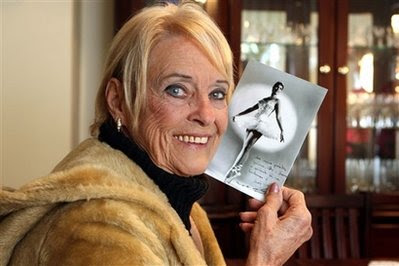
A former model and ballerina is making headlines across Brazil after being identified as John McCain`s lover 51 years ago. Maria Gracinda Teixeira, 77, says she is the woman the Republican presidential candidate fondly described — though never named — in his 1999 book `Faith of My Fathers.`
The former "dancer" was tracked down by Brazil's O Globo newspaper . Maria Gracinda Teixeira says, "He was a lovely person and loved to go out with me. I called him 'John' but he was my dear and my coconut dessert."He was such a good kisser that I had to purchase a book which taught me how to kiss to keep up with him."
Asked about John in bed, Gracinda says, "Of course we had sex...he was not only good at kissing but good at everything."
In an interview with the newspaper Extra, Garcinda described the young McCain as "cuddly, affectionate and romantic" and noted he called her "my coco bonbon".
Garcinda, known by her working name Cherie, describes herself not only as a former model, “but also a dancer, miss and lover of very important men”.
John McCain Is Against Birth Control
More On:
John McCain
On historic Griswold v. Connecticut anniversary, NARAL Pro-Choice America says McCain's anti-choice record includes opposition to birth control
Washington, DC – On June 7, anti-choice activists around the country will protest the historic Supreme Court ruling that held that the right to privacy includes the right to birth control – showing just how far out of the mainstream their agenda really is. While the majority of Americans support the use of birth control to prevent unintended pregnancy, John McCain has actually voted to block women's access to birth control. Nancy Keenan, president of NARAL Pro-Choice America, said that voters should question the myth of the moderate maverick that the McCain campaign is selling.
"Forty-two years ago, the United State Supreme Court ruled in Griswold v. Connecticut that the right to privacy includes the right to birth control, yet American women are still facing attacks on their freedom and privacy from every level, including the White House," Keenan said. "Many Americans may be unaware that it's not just a fringe group of activists who oppose birth control. Seemingly ‘mainstream' anti-choice politicians like John McCain are consistently bowing to the pressure of their far-right base and moving an agenda that is out-of-touch with the American public."
John McCain has, in fact, voted at least 22 times against women's access to family-planning services, including birth control.
"During his twenty-five years in office, Sen. McCain has consistently voted to block low-income women's access to birth control, to deny our teens accurate information about birth control and condoms, to stop measures that would require insurance companies to cover birth control, and to prevent funds to an organization that provides family-planning services – not abortion – for the world's poorest women. Voters need to know that John McCain is not only against abortion, he is against birth control."
On June 7, 1965, by a vote of 7-2, in Griswold v. Connecticut, the Supreme Court struck down a Connecticut law that prohibited the use of contraceptives, holding the statute violated the constitutional right to marital privacy. This decision is cited as fundamental to privacy rights, but today, the right to use birth control is under increasing attack from extreme anti-choice activists and pressure groups. This weekend, the American Life League, an anti-choice, anti-birth control group, is launching "Protest the Pill Day '08: The Pill Kills Babies."
To learn more about John McCain's full anti-choice record, including a section on his votes against access to family-planning services, please visit: http://www.prochoiceamerica.org/assets/files/mccain_fact_sheet.pdf.
Pro-Abortion Groups Renew $30 Million Campaign Against McCain, Sarah Palin
More On:
John McCain,
Sarah Palin
 Three pro-abortion groups are renewing their pledge to spend $30 million collectively bashing John McCain. The organizations upped their commitment to the attack ads and get-out-the-vote efforts with the addition of Alaska Governor Sarah Palin to McCain's ticket.
NARAL, Planned Parenthood and Emily's List are the long-time heavy hitters of the pro-abortion movement and they each previously announced multi-million dollar campaigns targeting the presidential election.
They told The Hill newspaper on Friday that voters can expect to see the effort roll out over the last 60 days of the election season.
"This is the most anti-choice ticket in history of the Republican Party," NARAL Political Director Beth Shipp told the paper. "McCain put someone as outside the mainstream as you can on his ticket, which is Sarah Palin."
Shipp is concerned that Palin will draw the kind of voters -- independents, pro-abortion Republicans and women -- that they are working to persuade to vote for pro-abortion candidate Barack Obama.
NARAL's $10 million will reportedly target about three dozen Congressional districts where the organization thinks it can swing enough votes to Obama to make the difference in the election.
Planned Parenthood also told The Hill that Palin makes the differences between the tickets clear with respect to abortion.
"This selection may satisfy the right wing of the Republican Party, but it will further alienate mainstream women voters," it said.
Emily's List president Ellen Malcolm, a prominent Hillary Clinton supporter during the Democratic primary, says Palin will be unable to win over disaffected Clinton backers who, she says, are gravitating towards Obama.
"With the most important decision of his candidacy, Senator McCain managed to appear politically expedient, reverse his advantage on experience, damage his potential for growth among independents and undecided voters, and turn off the women who supported Senator Hillary Clinton," she told The Hill.
Ellen's comments make it clear that pro-abortion women's groups like Emily's List are more concerned with abortion than with helping and promoting women.
"If Senator McCain thought that putting Governor Palin on the ticket would be a game changer, he may have been right, but not in the way he intended. Senator McCain has seriously misjudged women voters if he thinks he can win them over simply by putting a woman on the ticket," she said.
However, polls show that about 20 percent of Clinton backers will support McCain in the November election.
Freddie Mac paid McCain's manager $15,000 monthly until August
More On:
Freddie Mac,
John McCain
Freddie Mac paid $15,000 a month to a firm owned by Sen. John McCain’s campaign manager from the end of 2005 through last month. The disclosure contradicts a statement Sunday night by Mr. McCain that the campaign manager, Rick Davis, had no involvement with the company for the last several years.
The Times, bases its report on "two people with direct knowledge of the arrangement."
They said they did not recall Mr. Davis doing much substantive work for the company in return for the money, other than speak to a political action committee composed of high-ranking employees in October 2006 on the coming midterm congressional elections. They said Mr. Davis’s his firm, Davis & Manafort, was kept on the payroll because of Mr. Davis’s close ties to Mr. McCain, the Republican presidential nominee, who was widely expected by 2006 to run again for the White House.
Mr. Davis took a leave from Davis & Manafort for the duration of the campaign, but as a partner and equity-holder continues to share in its profits.
A Freddie Mac spokeswoman said the company would not comment. The McCain campaign did not respond to a request for comment.
McCain has been attacking Sen. Barack Obama for his ties to former officials of Freddie Mac and Fannie Mae. Both mortgage lenders, which have been taken over by the federal government, have cultivated congressional allies for years to ward off efforts to restrict their business.
It takes 13 cars to be John McCain
More On:
John McCain
When you have seven homes, that’s a lot of garages to fill. After the fuss over the number of residences owned by the two presidential nominees, NEWSWEEK looked into the candidates’ cars. And based on public vehicle-registration records, here’s the score. John and Cindy McCain: 13. Barack and Michelle Obama: one.
One vehicle in the McCain fleet has caused a small flap. United Auto Workers president Ron Gettelfinger, an Obama backer, accused McCain this month of “flip-flopping” on who bought daughter Meghan’s foreign-made Toyota Prius. McCain said last year that he bought it, but then told a Detroit TV station on Sept. 7 that Meghan “bought it, I believe, herself.” (The McCain campaign did not respond to multiple requests for comment.)
Obama’s lone vehicle also is a green machine, a 2008 Ford Escape hybrid. He bought it last year to replace the family’s Chrysler 300C, a Hemi-powered sedan. Obama ditched the 300C, once 50 Cent’s preferred ride, after taking heat for driving a guzzler while haranguing Detroit about building more fuel-efficient cars.
If John McCain owns seven houses, well that’s a lot of garage space for cars to take so we all could relate, right? After all, he can’t just leave the garages empty. HuffPo has a slideshow of McCain’s rides
John McCain, the elitist that you can’t believe in…
Friday, September 19, 2008
McCain to new lows
More On:
John McCain
Yesterday, Republican John McCain held up the dog tags of a soldier killed in Afghanistan, saying they had been given to him by a female supporter.
According to the Associated Press, The Arizona senator lamented how negative the presidential contest had become and then told the audience that a woman named Cheryl Lee Patrick had reminded him why politics matter.
“When Sarah and I landed in the airport here there was a woman there to greet us, and she handed me an envelope,” Mr. McCain said.
“Please remember and support our troops in Afghanistan. God bless you,” McCain read from the envelope. He opened it and pulled out Lybert's dog tags, as members of the audience gasped.
“I will do everything I can and know to make sure his sacrifice was not in vain,” McCain told the audience to loud cheers.
In 2000, a similar incident occurred on the McCain campaign trail. Having fought back against push-polls suggesting he fathered an illegitimate black child, McCain was facing accusations of having gone negative. At a town hall event, he was confronted by a woman who told him that her son had believed in him, and was now disillusioned with politics. McCain swore on the spot to return honour to politics and promised to call the kid immediately. It was a huge moment, and allowed McCain to close the books on his own questionable behaviour.
Not to suggest that his campaign would deliberately create a story line during a week when they have been repeatedly accused of lying about Barack Obama's record. But it must be a relief for the guy to be talking about war again.
John McCain's economic advisor Carly Fiorina benched after gaffe
More On:
Carly Fiorina,
John McCain
 She was named the world's most powerful businesswoman for seven years in a row. She ran an empire as the chief executive officer of IT major Hewlett Packard before being sacked in 2005.
And now Carly Fiorina, who is US Republican Presidential candidate John McCain's chief economic advisor, has again been benched. This time she was benched for her remarks on McCain himself and his running mate Sarah Palin.
In an interview to a news channel, she said that neither McCain nor Palin was capable of running a large corporation. She went on to say that even McCain's Democratic rival Barack Obama and his running mate Joe Biden could not run a major business.
"A major corporation is not the same as being president or vice president of the United States. To run a business you have to have a lifetime of experience in business. Neither Sarah Palin, John McCain, Joe Biden nor Barack Obama has this experience. But that's not what are doing," Fiorina said.
The McCain staff admitted that the Republican candidate was very angry over the statement made by Fiorina and this led to her being taken off all public appearances.
John McCain: Another Day, Another Lie
More On:
John McCain
Honestly, it's getting harder and harder to keep up with all of the lies that come out of John McCain's mouth. His latest (as I type this anyway)?
Two years ago, I warned that the oversight of Fannie and Freddie was terrible, that we were facing a crisis because of it, or certainly serious problems," Sen. John McCain, R-Ariz., told CBS this morning. "The influence that Fannie and Freddie had in the inside the Beltway, old boy network, which led to this kind of corruption is unacceptable and I warned about it a couple of years ago.
And here is John McCain 10 months ago when asked about the subprime mortgage crisis:
But so, in this whole new derivative stuff, and SIBs and all of this kind of new ways of packaging mortgages together and all that is something that frankly I don’t know a lot about. [...]
But I don’t know of hardly anybody, with the exception of a handful, that said ‘wait a minute, this thing is getting completely out of hand and is overheating.'
So, I’d like to tell you that I did anticipate it, but I have to give you straight talk, I did not.
by BarbinMD
Wednesday, September 17, 2008
John McCain invented the Blackberry
More On:
Blackberry,
John McCain
Senator John McCain's PR came up with something that rest of the world was unaware of. It seems that McCain is not as dumb as he seems on-screen. According to his PR, he has invented the Blackberry :)
The comment met with immediate derision across the internet.
"McCain economic adviser claims McCain invented the Blackberry. I'd vote for him if it was the iPhone," joked "mnoreen," on Twitter.
And someone else has started a running joke with the word "#invent" on the micro-blogging service. Hundreds of sarcastic comments are pouring through the service.
Asked by campaign trail reporters what McCain's experience as chairman of the Senate Commerce Committee does to help him to understand the economy and lead the country through its current turmoil, Douglas Holtz-Eakin waved his BlackBerry in the air, according to The Politico.
"Telecommunications of the United States is a premier innovation in the past 15 years, comes right through the Commerce committe," Holtz-Eakin said. "So you're looking at the miracle John McCain helped create and that's what he did."
The comment met with immediate derision across the internet.
"McCain economic adviser claims McCain invented the Blackberry. I'd vote for him if it was the iPhone," joked "mnoreen," on Twitter.
And someone else has started a running joke with the word "#invent" on the micro-blogging service. Hundreds of sarcastic comments are pouring through the service.
Obama does Hollywood
More On:
Barack Obama,
Beverly Hills,
Chris Rock,
Hollywood,
Jodi Foster,
John McCain,
Leonardo diCaprio,
Tobey McGuire,
Will Ferrell
Hollywood A-listers paid big bucks to see Sen. Barack Obama at a Beverly Hills dinner on Tuesday night, where Obama focused his remarks on easing Democrats’ jitters about the close race ahead. Obama spoke for around 15 minutes in an outdoor courtyard at the Greystone Estate, a Tudor-style mansion on 16 acres overlooking Los Angeles. Attendees at the $28,500-per person dinner included Will Ferrell, Chris Rock, Tobey McGuire, Leonardo diCaprio and Jodi Foster.
“A lot of you, just in conversations while we were in the photo lines, had all sorts of suggestions,” Obama said. “…And a lot of people have gotten nervous and concerned. Why is this as close as it is? And what’s going on?” The Illinois senator said that the race was always going to be a hard-fought contest because he represented a “leap” for voters, especially when running against John McCain, a “genuine hero” with a “compelling biography.” Obama said that there was “enormous resistance … because people have been fed cynicism for a long time” but he said that he remained “confident about winning because I’ve looked at John McCain, I’ve looked at Sarah Palin, I’ve looked at their agenda, and they don’t have one.”
Despite the lavish setting, the gourmet meal (filet of beef and asparagus), and the exclusive crowd, Obama said his campaign was being fought for people who would “never see the inside of a building like this and don’t resent the success that’s represented in this room, but just want the simple chance to be able to find a job that pays a living wage.”
Sen. McCain took his own shot at Obama on Tuesday, as the presidential hopefuls jockeyed over who would best lead during a financial crisis like the one that had seized Wall Street last weekend. “He talks about siding with the people just before he flew off for a fund-raiser in Hollywood with Barbara Streisand and his celebrity friends,” McCain said during an Ohio rally. “Let me tell you, my friends, there’s no place I’d rather be than right here with the working men and women of Ohio.”
For his part, Obama told the audience Tuesday night that the recent Wall Street turmoil would help clarify the choices facing voters. “It’s reminded people that this is not a game. This is not a reality show, no offense to any of you,” Obama said to laughter. “This is not a sitcom.” Between 250 and 300 attended the fund-raiser, according to the campaign, and was set to attend a second event featuring a performance by Streisand later Tuesday night.
Obama’s decision to forego public financing means that he’s still able to solicit private donations for his campaign; McCain has accepted public financing and can no longer solicit campaign contributions. Both candidates can also continue to raise money for their respective political parties, though there are greater restrictions on how that money can be used.
Obama raised $66 million in August, a new campaign record, but McCain set his own record by drawing a $47 million haul. Speaking to reporters on Tuesday, top strategist David Axelrod played down the idea that the Obama campaign believed that its “very large and dynamic fund-raising base at the grassroots” would ever translate to “some huge fund-raising advantage.” “We knew we were going to be up against the Republican fund-raising machine,” Axelrod told reporters. “Our ability to draw on the grassroots has been helpful so I don’t think we’d be in a better position” if the campaign had accepted public funding.
Subscribe to:
Posts (Atom)

 Posts

